
The best UAE free zone for e-commerce business may not be the one with the lowest advertised setup cost. Price matters, but the right option also depends on what you sell, where your customers are, and how orders are fulfilled. A dropshipping business and a seller that holds stock may need different licensing and operational arrangements.
This guide will help you shortlist Free Zones based on your business model rather than a universal ranking. You’ll learn how to check whether your intended online selling activity fits a licence and how to compare practical considerations such as visa needs, workspace, storage, fulfilment, and customer markets. Free Zone rules and facilities can differ, so confirm current requirements with each relevant authority before applying. You’ll also see when a Mainland setup may be worth comparing and what to verify before committing to a package. Advisors Zone provides Free Zone and Mainland formation support and can help relate your activity, ownership, and fulfilment plans to suitable setup options. Authority requirements still need to be confirmed for your specific case.
Key Takeaways
- The best UAE free zone for e-commerce business depends on your licensed activity, ownership needs, fulfilment model, and target customers, not a universal ranking.
- Map how you sell, whether you hold stock, use a marketplace, or rely on third-party fulfilment, before shortlisting jurisdictions.
- Compare Free Zones using authority-confirmed answers on permitted activities, facilities, visa options, ownership structure, and ongoing obligations.
- Build a complete setup-cost checklist and distinguish authority charges from consultancy fees and optional services.
- Use a step-by-step decision process to verify your shortlist and decide whether a Mainland comparison is relevant to your planned sales.
How to identify the best UAE free zone for e-commerce business
The best UAE free zone for e-commerce business is the one that fits your licensed activity, ownership needs, day-to-day operations, and intended customer markets. There’s no single Free Zone that suits every online seller. A business selling its own products from stored inventory may need different facilities and arrangements from a seller using third-party fulfilment.
Separate two decisions: which jurisdictions to investigate, and whether an authority can license your specific activities and proposed operations. A package headline may mention e-commerce, but that doesn’t confirm that it covers your products, sales channels, or fulfilment plan. Before committing, verify the current activity list, licence conditions, facility options, and other requirements directly with the relevant authority.
What does an e-commerce Free Zone setup need to match?
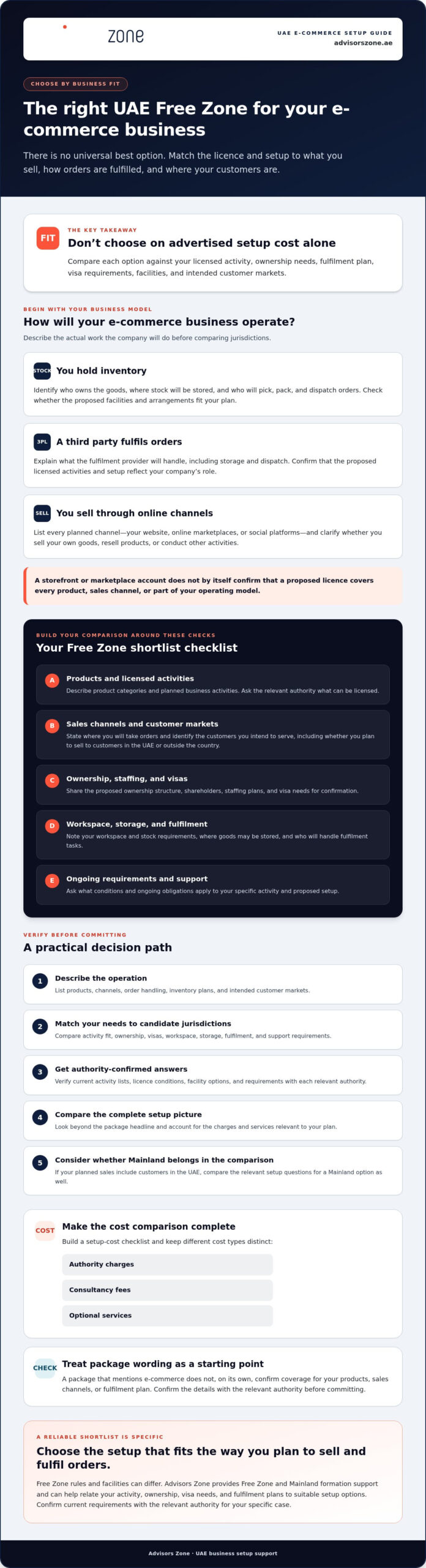
Describe what you’ll sell and how customers will buy it. List your products, sales channels, and planned business activities, such as retailing your own goods or reselling products. Then outline the operating model: whether you’ll hold inventory, where goods may be stored, and who will pick, pack, and dispatch orders. This gives you specific questions to ask each authority instead of relying on broad package descriptions.
Define your setup needs as well. Consider whether the business needs visas, workspace, or space for stock and fulfilment. Availability and conditions can vary between Free Zones, so confirm each item rather than assuming it is included in a package.
Which details should sellers define before comparing zones?
Prepare a short operating profile before requesting comparisons. State whether you’ll sell your own goods, resell products, list through marketplaces, or use a third-party fulfilment provider. Identify your intended customer markets and explain how orders will reach them. A seller planning to serve customers in the UAE may need to ask different jurisdiction and sales-channel questions from a seller focused on customers outside the country.
- Products and activities: Identify product categories and the business activities you plan to conduct, then ask the authority to confirm what can be licensed.
- Ownership and people: List the proposed shareholders, ownership structure, staffing plans, and visa needs for confirmation.
- Operations and facilities: Note storage, inventory, workspace, and fulfilment requirements, including which tasks a provider will handle.
Use general directories such as this overview of UAE free zones to understand the range of jurisdictions, not to confirm current licensing terms. Build a shortlist, then verify each point with the relevant authority. Advisors Zone can help relate your activity, ownership, visa needs, and fulfilment plan to Free Zone setup options, while the authority remains the source for current requirements.
How your e-commerce model affects UAE Free Zone selection
Your selling and fulfilment model shapes which Free Zones are worth comparing. A retailer that buys and holds its own stock has different operational questions from a seller who lists products on a marketplace or arranges for a third party to store and dispatch orders. These differences don’t determine which jurisdiction is suitable on their own, but they help you ask each authority questions based on your actual plan.
Keep three things separate: the storefront customers see, the channels used to take orders, and the company activities that need to be licensed. Having a website or marketplace account doesn’t confirm that the proposed licence covers every part of the business. Ask the relevant authority how to describe your activities and whether the proposed setup fits the way you plan to operate.
Selling through a website, marketplace, or both
List every planned sales channel, including your own website, online marketplaces, and social platforms. Then explain what the company will do through each one: sell its own goods, resell products, or carry out other planned activities. Ask the Free Zone authority how those activities should appear on the licence and whether the proposed structure covers the full operating model. Don’t assume that a general e-commerce label automatically covers every product category or channel.
Holding stock, using fulfilment, and shipping orders
Map an order’s route from supplier to customer. Identify who owns the goods, where they’ll be stored, and who will pack and dispatch them. If a fulfilment provider handles some steps, describe that arrangement when asking about facility options and permitted operations. Confirm available storage or fulfilment arrangements directly with the authority or provider, as options and terms can differ.
Be specific about where your customers are and how goods will reach them. Cross-border shipping, imports, customs, and product-specific conditions may involve requirements beyond the Free Zone licence. Verify those questions with relevant authorities and qualified customs, legal, or product-compliance advisers before relying on a proposed model.
For background on the UAE business environment, the World Bank’s historical ease-of-doing-business resource for the UAE may provide context, but it isn’t a current licensing guide. Confirm licence and operating requirements with the relevant authority.
Once you’ve mapped your channels, stock ownership, fulfilment responsibilities, and customer markets, compare Free Zones against the same set of needs. Contact Advisors Zone about your e-commerce setup if you’d like help relating your plan to a UAE company formation option. Authority confirmation remains essential, and suitability depends on your specific activities and arrangements.
UAE Free Zone comparison: evaluate activity, operations, and support
Compare Free Zones against the same business-specific criteria, not package labels or broad claims. The best UAE free zone for e-commerce business is the one whose authority confirms that its licence and available setup provisions fit your intended activities and operations. Record what is confirmed, what may vary, and what needs written clarification before comparing setup components.
A practical framework for comparing Free Zones
Use a working table to capture answers from each relevant authority. Ask the same questions of every option, then compare the responses. An unanswered question is a follow-up item, not a reason to assume that a package includes a facility, visa option, or activity.
| Criteria | Questions to verify | Authority-confirmed answer |
|---|---|---|
| Licensed activity | Does the activity wording cover the products and planned sales model? | Record the exact wording, confirmation status, and date checked. |
| Facilities and operations | What workspace, storage, or fulfilment options are available for this setup? | Note what is available, variable, or still unconfirmed. |
| Visas and ownership | How do the proposed ownership structure and visa needs affect the setup? | Record the authority’s response for your specific case. |
| Ongoing obligations | What renewals, filings, or other continuing requirements should you plan for? | List the requirements to confirm and their source. |
Compare full setup components only after confirming what is included, what is optional, and which terms apply. Keep authority or government charges distinct from consultancy service charges, and request current details rather than relying on an old quotation or headline offer.
Free Zone options: what to verify
Use the Free Zone setup information and RAKEZ setup information as starting points for research, not endorsements or proof that a particular e-commerce activity is permitted. Confirm the exact activity and licence wording directly with each relevant authority. Then ask about current facility, visa, ownership, and operational options for your proposed arrangement.
Don’t transfer an answer from one Free Zone to another. Their rules, facilities, costs, and benefits may differ, and a package described as suitable for online business may not fit every product or fulfilment model. Mark each item as confirmed, variable, or requiring written authority clarification. This keeps your comparison useful even while you’re waiting for answers.
For broader formation context, review company structure and setup requirements alongside your e-commerce questions. Advisors Zone supports Free Zone and Mainland company formation, licensing, and related setup needs. The relevant authority remains the source for current licence requirements and confirmation.
E-commerce Free Zone costs and setup details to confirm before choosing
A headline package isn’t a complete cost comparison. To identify the best UAE free zone for e-commerce business, ask for current written terms that reflect your activity, facilities, visa needs, and company structure. Inclusions can vary by authority and package, so confirm each item before making a commitment.
Which cost components should an online seller ask about?
Request an itemised breakdown and clarify who charges each amount. Keep authority or government charges separate from consultancy service charges and optional services. Ask the provider to confirm whether each component is included, separately charged, or not applicable to your proposed setup.
- Licence and authority charges: Ask what the quoted amount covers and whether it reflects the proposed activity and licence wording.
- Facilities: Confirm whether workspace or storage is included, and check the terms and suitability for your operations.
- Visa and establishment items: Ask which items apply to your planned setup, how many are included if any, and what may be charged separately.
- Renewal and optional services: Request current renewal terms and a breakdown of any additional services you may choose.
Compare like with like. A lower headline figure may not cover the same facilities or services as another offer. Ask for a current breakdown that separates authority charges, consultancy fees, and optional items, and check the applicable terms with the relevant authority and provider.
What documents and process details may vary?
Prepare a clear description of your planned activities, ownership structure, and shareholders. The authority may request identification documents and other information, but its current document list should guide your preparation. Confirm whether any documents need translation, attestation, or another specific format before submitting them.
Ask the authority to outline the steps that apply to your case, including any review or requests for additional information. Processing estimates can depend on the application and authority procedures, so treat them as variable rather than relying on an unconfirmed fixed timeline. Confirm the sequence and any dependencies in writing.
Before choosing, check that the cost breakdown matches the activity, facility, visa, and renewal terms you’ve had confirmed. Advisors Zone can help you assess Free Zone setup options and prepare questions about your requirements. Discuss your e-commerce setup requirements with Advisors Zone; approval and processing remain subject to the relevant authority’s requirements.
Choose your UAE e-commerce setup and plan the next steps
You don’t need to pick a Free Zone from a ranking. Turn your research into a decision sequence: define how the business will operate, shortlist jurisdictions that may fit, verify current requirements, and select the setup route that matches the authority’s confirmed terms. This helps you choose the best UAE free zone for e-commerce business based on your plans rather than assumptions about a package.
A shortlisting checklist before you apply
Prepare a concise business profile and use it to check your options consistently:
- Define the model: Record the products, proposed activities, sales channels, customer markets, and fulfilment arrangements you intend to use.
- Verify requirements: Ask the relevant authority to confirm activity and licence wording, facility options, ownership provisions, visa details, and any ongoing obligations for your proposed setup.
- Review written terms: Compare current documents and quotations. Mark what the authority has confirmed, what may vary, and what needs clarification or professional advice.
Consult the applicable authority’s current guidance for licence information. The right licence and requirements depend on your activities and chosen jurisdiction, so general information should not replace confirmation for your specific case.
When to compare a Mainland setup or seek tailored guidance
A Mainland comparison may be worth discussing if your intended customer markets, sales arrangements, or planned operations raise questions about whether a Free Zone setup fits. It isn’t automatically necessary for every online seller. Compare the routes against your actual activities and how you plan to serve customers, then confirm the relevant requirements before deciding.
If product activities, fulfilment arrangements, ownership, or customer locations are unclear, seek a case-specific review before applying. Advisors Zone can assist with Free Zone selection, company formation, trade licensing, and related setup support. The relevant authority is responsible for confirming current requirements and deciding on applications.
For help relating your plans to a setup option, discuss your e-commerce setup options with Advisors Zone. Be ready to outline your activities, ownership needs, and fulfilment approach.
Make your e-commerce setup decision with confidence
The best UAE free zone for e-commerce business is the one that fits your planned activities and operations, with current requirements confirmed by the relevant authority. A useful shortlist reflects how your company will sell and fulfil orders. Your final comparison should account for licensing, setup provisions, and written terms rather than package headlines alone.
Advisors Zone provides personalized support with Free Zone selection, formation, licensing, and related setup needs. Its services also include visa and immigration assistance, corporate bank account assistance, and Corporate Tax & VAT Support. Visa matters are subject to eligibility and current government rules, bank approval is not guaranteed, and current tax and VAT rules should be checked with official sources or a qualified professional. This support can help you assess setup options, but it doesn’t replace authority confirmation or tailored professional advice where needed.
Need help choosing the right UAE business setup? Advisors Zone can review your intended activity, ownership requirements, visa needs, and preferred jurisdiction and guide you through the company formation process.
Frequently Asked Questions
Which UAE Free Zone is best for an e-commerce business?
There isn’t one Free Zone that is best for every e-commerce business. The best UAE free zone for e-commerce business depends on whether the licensed activities match your products and sales model, and whether the setup fits your ownership, visa, workspace, storage, and fulfilment needs. Shortlist options against the same criteria, then confirm current activity wording and requirements with each relevant authority before choosing.
Can I sell online in the UAE with a Free Zone company?
A Free Zone company may be suitable for online selling if its licence and approved activities match the way it operates. Don’t assume that an e-commerce label automatically covers every product category, sales channel, or customer market. Before taking orders, describe your products, website or marketplace channels, and fulfilment arrangements to the relevant authority. Confirm current licensing conditions and any requirements for serving your intended customers.
How much does it cost to set up an e-commerce business in a UAE Free Zone?
The total cost depends on the jurisdiction, licence activity, facilities, visa requirements, and services selected, so request a current written breakdown rather than relying on a headline package. Ask which amounts are authority or government charges, which are consultancy service charges, and which items are optional or separately billed. Confirm renewal terms and package inclusions in writing, since offers and applicable conditions can change.
What should I compare when choosing a Free Zone for online selling?
Compare the exact licensed activity, facility options, ownership structure, visa needs, and ongoing obligations against your planned business model. Also explain whether you’ll sell your own goods, resell products, use a marketplace, hold stock, or outsource fulfilment. Ask each authority the same questions and mark answers as confirmed, variable, or awaiting clarification. This makes the comparison more useful than ranking zones by marketing claims alone.
Do I need a warehouse to start an e-commerce business in a UAE Free Zone?
Not necessarily. Whether you need a warehouse depends on whether you hold inventory, where goods will be stored, and who packs and dispatches orders. A business using a third-party fulfilment provider may have different facility needs from one managing stock itself. Explain your arrangement to the relevant Free Zone authority and provider, then confirm available options and any conditions before selecting a licence or setup package.
Can a UAE Free Zone company sell to customers outside the UAE?
A Free Zone company may be able to serve customers outside the UAE, but confirm that its licensed activities and proposed operations cover the arrangement. Map where customers are located, who owns and dispatches the goods, and how orders will cross borders. Import, customs, shipping, and product-specific requirements may also apply depending on the goods and destination. Check those questions with relevant authorities and qualified advisers before trading.
Is a Free Zone or Mainland setup better for an e-commerce company?
Neither route is automatically better. Compare them against your activities, target customers, sales arrangements, ownership needs, and fulfilment plan. A Mainland option may be worth reviewing if your intended operations or customer markets raise questions about whether a particular Free Zone setup fits. Ask the relevant authorities to confirm the rules that apply to your specific model, and compare current written terms before deciding.
What happens if my e-commerce licence does not cover the way I operate?
If your activities don’t match the licence, you may face a compliance issue, so don’t rely on assumptions about what a broad activity label permits. Pause the uncertain activity and contact the licensing authority to ask what correction or approval may be needed. The response will depend on the jurisdiction and circumstances. Confirm any licence amendment or additional requirements before changing how you sell, handle products, or fulfil orders.