
For UAE freezone company registration, one of the most important steps happens before you submit any paperwork: matching your planned business activity and operating needs to a suitable Free Zone. A mismatch can lead to licensing questions or require you to revisit your setup plans. Clarifying these choices early gives your application a stronger starting point.
If you’re unsure which jurisdiction suits your business, what shareholder information to prepare, or how visa needs may affect your setup, start by writing down how the company will operate. Requirements and costs vary between Free Zone authorities, so compare options against your actual plans rather than choosing by a headline package alone.
This 2026 guide explains the key decisions to make before applying and the main stages of Free Zone company formation. You’ll learn how to assess your activity and jurisdiction, organize ownership information, and plan for licensing, facilities and visas. Advisors Zone provides personalized support with Free Zone company formation and related setup needs, helping you turn those decisions into a practical next step.
Key Takeaways
- Approach UAE freezone company registration as a sequence of business decisions and authority-specific steps, not one universal application.
- Match your planned activities and ownership structure to a Free Zone whose current requirements suit your operation.
- Compare visa plans, facilities, permissions and authority requirements before choosing a jurisdiction.
- Organize your business and shareholder information early, then follow the selected authority’s current document instructions.
- Plan for licensing, visas, banking and tax-related support as connected but separate parts of establishing a business.
What UAE Freezone company registration means for your business
UAE freezone company registration is the process of establishing a business entity under a selected Free Zone authority and applying for a licence covering approved activities. It isn’t one universal application. Each authority sets its own formation steps, documentation, licensing conditions and operating requirements. The right route depends on the work you plan to do, your ownership needs and how the company will operate.
Think of formation as a set of connected decisions, not just a form to complete. Your proposed activities need to fit the authority’s licensing framework, while your ownership and operating plans need to fit its requirements. Consider who your customers will be, how you’ll deliver your products or services, whether you expect to hire staff and what facilities you may need. These details give you a practical basis for comparing jurisdictions.
Free Zones operate under different authorities, with rules and procedures that may differ. The overview of Free-trade zones in the United Arab Emirates provides broader context, but the selected authority’s current guidance is what matters for your proposed setup.
What does registering a Free Zone company involve?
Formation establishes the business entity under the chosen authority. Licensing is a related but separate decision: the licence sets out the activities the company is permitted to carry out, subject to the authority’s rules and approval. Make sure the activities you apply for reflect the work the business actually intends to do. A broad description such as “consulting” may not be enough to explain a business that offers several distinct services.
Registration and licensing are also separate from immigration, banking and tax-related matters. Company formation doesn’t guarantee visa approval or a corporate bank account. Visa applications are subject to eligibility and current government rules, while banks assess applications independently. Tax obligations depend on applicable rules and the company’s circumstances, so treat tax planning as a separate part of the setup.
Who may consider a UAE Free Zone setup?
First-time founders, foreign investors, startups, SMEs and established companies expanding into the UAE may consider a Free Zone structure. The key question is whether the authority’s current permissions and conditions suit the business model, not whether the applicant fits a broad category. For example, a consultancy serving international clients may have different operating needs from a company planning sales to UAE-based customers or employing a team.
Before deciding, compare the planned work, customer relationships, ownership arrangement and day-to-day operations. Advisors Zone provides personalized Free Zone company setup guidance to help align these needs with a suitable formation route. This can help you identify the authority-specific questions to resolve before moving forward.
How UAE Freezone company registration moves from planning to application
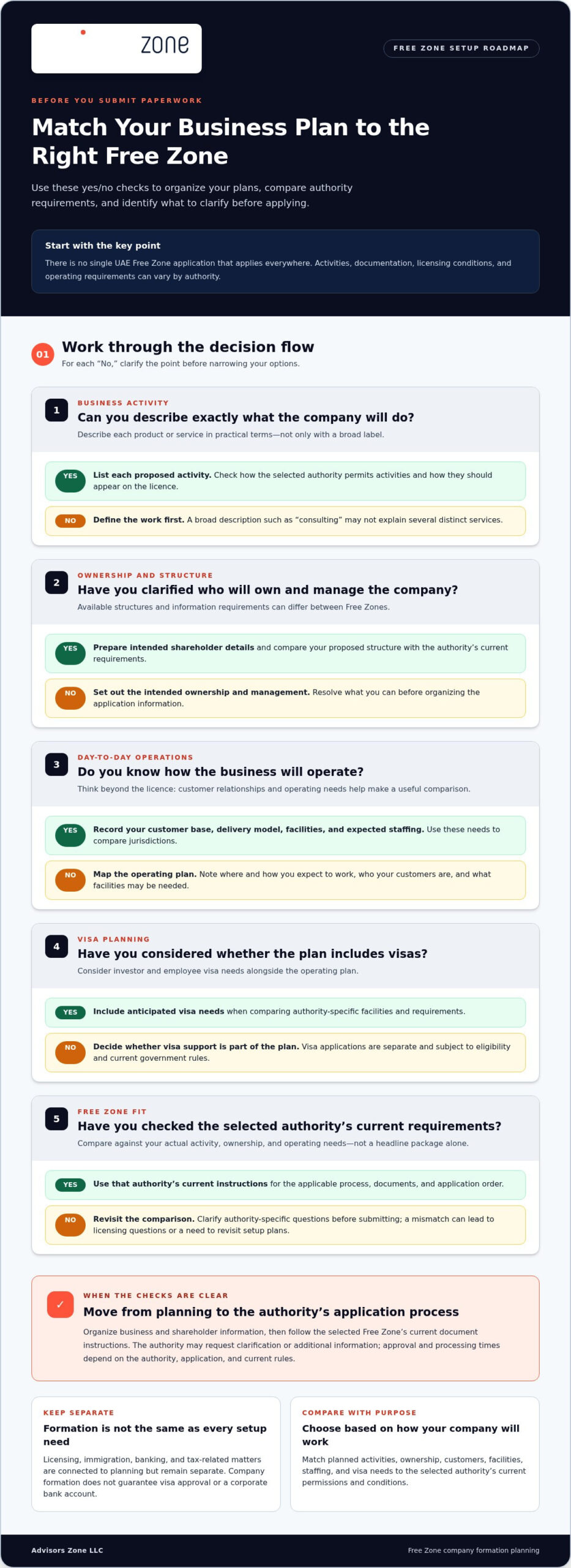
UAE freezone company registration is easier to prepare for when you turn your business plan into clear decisions before applying. There isn’t one sequence that applies identically across every Free Zone. Use the roadmap below to organize your information, then follow the selected authority’s current application instructions. Steps may overlap or differ depending on the activity and jurisdiction.
What should you decide before choosing a Free Zone?
Start by describing what the company will actually do, who will own it and how it will operate. Note your expected customer base, whether you need premises or other facilities, and whether investor or employee visa support is part of the plan. These details help narrow your options and frame useful questions for the authority. Don’t assume that one Free Zone’s activity permissions, package or conditions apply elsewhere.
What happens during registration and licensing?
The chosen authority sets the applicable application route, document requirements and review process. Advisors Zone can assist with Free Zone company formation, including selecting a Free Zone, considering business activities and ownership structure, and organizing documentation for the relevant process. The authority may request clarification or additional information during its review. Approval and processing times depend on the authority, the application and current rules, so plan around the process steps rather than relying on a fixed timeline.
Use this general roadmap to prepare, then treat the selected authority’s instructions as the guide to the steps and order that apply to your case.
- Define the business plan. Summarize the product or service, intended customers and how the company will deliver its work. A clear description makes it easier to identify activities to discuss with the authority.
- List the proposed activities. Describe each activity in practical terms rather than relying only on a broad business label. The authority determines which activities it permits and how they should appear on the licence.
- Clarify ownership and structure. Prepare the intended shareholder details and consider how the company will be held and managed. Available structures and information requirements can vary by Free Zone.
- Set out operating needs. Record where and how the business expects to operate, what facilities it may need and whether it expects to hire staff. Include anticipated visa needs so they can be considered alongside the setup plan.
- Compare jurisdictions and prepare the application. Shortlist Free Zones against your activity and operational requirements. Once you select an authority, use its current guidance to complete the application and assemble the documents it requests.
- Submit and follow up. The authority reviews the application and may request further details or documents. Respond through the stated process and track the next steps communicated by the authority.
Company formation and licensing are distinct from later tasks. Immigration and visa processes, corporate banking applications, and tax-related matters each have their own requirements. Visa decisions are subject to eligibility and current government rules, while banks make independent account decisions. Planning for these areas early helps you identify follow-up work without assuming it is included in incorporation or that an outcome is assured.
If you’d like support aligning your activity, ownership and setup plan before applying, discuss your Free Zone registration plans with Advisors Zone.
How to compare Free Zones before registering your UAE company
A common misconception is that all UAE Free Zones follow the same rules. They don’t. Each authority sets its own activity permissions, licensing conditions, application requirements and operational arrangements, and these can change. Compare jurisdictions against your business plan, then review the relevant authority’s current guidance before deciding. A popular option or attractive package isn’t automatically the right fit for every company.
Use the criteria below to structure your comparison. Write down what your business needs, then assess each Free Zone against the same points rather than relying on a single headline benefit.
- Activity fit: Check whether the authority’s current licensing categories cover the work you intend to do. Describe your actual services or products clearly, especially if the business has more than one activity.
- Ownership and structure: Consider who will own the company, how shareholders will be arranged and how the business will be managed. Requirements and available structures may differ between authorities. If a Mainland route is also under consideration, compare the relevant Mainland company formation options against your intended operations.
- Visa plans: Set out whether founders or employees may need visa support. Availability and eligibility depend on the authority and current government rules, so don’t treat a visa option as automatic.
- Facilities and operations: Assess the premises, workspace or other facilities your business actually needs. Don’t assume every Free Zone has the same facility choices or that one office arrangement applies across all jurisdictions.
- Authority requirements: Compare current application, documentation and licensing instructions. Confirm how the authority handles your proposed activity and ownership arrangement before moving forward.
How do visa and operational needs affect the decision?
Start with practical needs, not assumptions. A founder working independently may plan differently from a company expecting to hire staff or use dedicated facilities. Visa needs should also be considered alongside the intended structure and authority requirements. Advisors Zone can help map these details to relevant Free Zone options, including ANC Free Zone setup. RAKEZ is another authority-specific option to assess against your business requirements. Neither should be treated as a universal recommendation.
Tax treatment also needs a separate assessment. A Free Zone licence alone doesn’t determine a company’s tax outcome; applicable rules and the company’s circumstances matter. Advisors Zone provides Corporate Tax and VAT support, but current rules and thresholds should be verified from official UAE sources. For advice that may affect your tax position, confirm your circumstances with a qualified tax professional.
Use the comparison to identify a suitable fit, not to declare a winner based on one feature. For UAE freezone company registration, Advisors Zone can help you assess activity, ownership, visa plans and operating needs together, then prepare for the relevant authority’s application process.
UAE Freezone registration checklist: prepare information and documents carefully
Good preparation starts with separating information you can organize now from documents the selected Free Zone authority formally requires. There is no single document checklist that applies to every UAE Free Zone. Requirements may change and can depend on the authority, business activity, ownership structure and visa plans. Use the examples below as preparation prompts, then follow the authority’s latest instructions before submitting an application.
What business information can applicants organise early?
Write a plain-language description of the proposed business: what it will offer, how it will operate and which activities it expects to carry out. Organize the planned ownership structure and shareholder details, including each shareholder’s role. These notes help you explain the setup accurately, but they aren’t a guaranteed or complete list of application documents.
- Activity and operations: Describe the services or products, expected customers and intended operating model. Keep the description consistent across planning notes and application fields.
- Ownership: Outline the proposed shareholders, ownership proportions and whether an individual or corporate entity will hold shares. The authority determines what supporting information or records it requires.
- Setup needs: Note any planned visas, staffing and facility requirements. These may affect the authority’s process and the information it requests.
- Possible supporting records: Depending on the case, an authority may request identity or passport details, address information, photographs or corporate shareholder records. These are examples, not universal requirements. Verify each document type, format and any attestation requirements against current authority guidance.
How can you avoid delays caused by incomplete preparation?
Before filing, compare your information and documents with the selected authority’s current instructions. Check that shareholder names and ownership details match across records, and that the activity description reflects the business you intend to conduct. If the authority’s forms use specific activity wording, follow its guidance rather than substituting a broad marketing description.
Review the application as a complete set. Confirm that required fields are answered, attachments are legible and any authority-specific format or certification instructions are followed. If ownership involves a corporate shareholder, identify the documents the authority requests for that situation instead of assuming an individual-shareholder checklist will apply.
Budgeting also benefits from a clear breakdown. Depending on the setup, costs may include authority charges for registration or licensing, selected facilities and visa-related processes, as well as consultancy service fees. Keep authority charges distinct from consultancy fees, and review the current itemized terms for the chosen route. Visa-related outcomes remain subject to eligibility and current government rules.
Complete preparation can make an application clearer, but it doesn’t guarantee approval or a particular processing time. Advisors Zone can help organize business information and documentation around your chosen setup. Get guidance on your Free Zone application preparation.
Next Steps: Support for UAE Freezone Registration
The next useful step is to turn your ideas into a decision-ready brief. You don’t need every detail settled. A clear view of your priorities makes it easier to compare options and identify questions that need an authority-specific answer before you commit.
What information should you bring to an initial setup discussion?
Prepare a short description of your intended business and how you expect it to operate. Note your ownership preferences, likely visa needs and any practical constraints that could shape your choice. Bring questions you’re still weighing, such as which activity wording best reflects your work or how your customer plans affect the structure.
- Business priorities: Identify what matters most, such as operational flexibility, facilities or plans to expand.
- Decisions still open: List uncertainties about the jurisdiction, activity classification or ownership arrangement.
- Relevant context: Note any planned changes that could affect the company’s needs after launch.
This preparation helps make guidance relevant to your circumstances. Advisors Zone can assist with formation, licensing and related setup requirements. Advice affecting legal, tax, immigration or financial decisions should be confirmed with the relevant authority or a qualified professional.
How can Advisors Zone support the formation journey?
Advisors Zone provides personalized guidance for Free Zone company formation, including selecting a Free Zone, considering business activities and ownership structure, and organizing documentation. Support can also extend to licensing, visa and immigration assistance, PRO services, corporate bank account assistance and Corporate Tax and VAT support. Each area has its own requirements, and approvals or outcomes are not guaranteed.
Use an initial discussion to clarify the choices that matter most to your plans. Discuss your UAE company setup with Advisors Zone and identify practical next steps.
Choose a clear path for your UAE business
Your next decision can shape more than the application: it helps set the direction for how your company will be established and supported as it grows. Approach UAE freezone company registration with a clear view of your priorities, while staying open to another route if it better fits your plans.
Advisors Zone offers personalized guidance across Free Zone and Mainland company formation, with support that can extend beyond incorporation to licensing, visas, PRO services, banking assistance and tax-related business support. Authority, visa, banking and tax outcomes depend on relevant requirements and approvals.
Need help choosing the right UAE business setup? Advisors Zone can review your intended activity, ownership requirements, visa needs and preferred jurisdiction and guide you through the company formation process.
Frequently Asked Questions
How do you register a company in a UAE Free Zone?
Begin with a short brief explaining what you’ll sell, how you expect to earn revenue and who will own and manage the company. This gives you a useful basis for discussing UAE freezone company registration with the selected authority or a setup adviser. Note your preferred trade name and alternatives too, since name acceptance is subject to the authority’s current rules. Then compare Free Zones against your activities, ownership and operating needs before preparing the application.
What documents are needed for UAE Freezone company registration?
The exact list comes from the chosen authority. Check its instructions for accepted formats, file quality, signing requirements and whether documents issued outside the UAE need translation or attestation. These details can affect how you prepare a document even when its type seems straightforward. Keep a copy of the submitted application and attachments together so you can refer to the same information if the authority requests clarification.
Can a foreigner register a company in a UAE Free Zone?
Foreign investors may explore Free Zone company formation, with applicable conditions set by the chosen authority and current rules. If shareholders live in different countries or an existing company will own shares, raise that early because the authority may need to review a different ownership profile. Prepare a clear explanation of who will make business decisions and how the proposed owners relate to the company.
What is the difference between a Free Zone and a Mainland company?
The key comparison is how each route fits the company’s planned commercial relationships and operating model. Map where customers are based, who will sign contracts and how services or goods will reach them. Then compare the relevant permissions and requirements for each structure. A business expecting to work with UAE-based customers should assess its specific sales and delivery arrangements rather than relying on a general assumption about either route.
How much does UAE Freezone company registration cost?
Ask for a written breakdown that identifies what each amount covers and which charges may recur. Depending on the setup, compare licence and registration charges, facilities, visa-related items and consultancy fees as separate categories. Check whether optional services are included or charged separately, and compare like-for-like scopes. Prices and package terms can change, so base your budget on current details for your chosen setup.
How long does UAE Freezone company registration take?
Rather than plan around a generic estimate, identify the milestones for your selected authority and what could affect each one. Clarify whether your launch plan depends on an external review, additional documents or a separate visa process. Keep key business dates flexible until you understand those dependencies. An adviser can help you organize and follow the application, but only the relevant authority can provide current process expectations.
Does a UAE Free Zone company automatically receive a particular tax treatment?
No. Before choosing a structure, prepare a simple picture of expected revenue sources, customer types and where the company will carry out its activities. These details can help a qualified tax professional assess which current UAE rules may be relevant to your business. Keep that assessment separate from the licensing decision, and don’t rely on a Free Zone label alone to predict the company’s tax position. Verify current rules and thresholds through official UAE sources.
Can Free Zone company registration include a residence visa?
Visa arrangements can be part of a setup plan, but company formation and an individual’s immigration application are separate considerations. Identify who may need a visa, their relationship to the company and when they expect to relocate or begin work. This helps frame the questions for the relevant process. Advisors Zone provides visa and immigration assistance, while eligibility and decisions remain subject to current government rules.