
The most familiar setup route may not be the right one for your business. If you’re researching how to start a business in UAE as a foreigner, begin with what you plan to do, who you need to serve, and how you expect to operate. Those answers help you compare Mainland and Free Zone company formation against your actual needs.
Licensing, ownership, visa options, documents, costs, and approvals can vary by activity and jurisdiction. A general checklist won’t resolve every question, but working through the decisions in the right order can help you prepare and avoid common oversights.
This guide covers the main steps: define your business activity, compare setup routes, choose a suitable structure, prepare for licensing, and plan for the work that follows incorporation. It also explains which details can affect costs and timing, what information may be requested, and when you need current, activity-specific guidance.
Key Takeaways
- To understand how to start a business in UAE as a foreigner, define your activity and operating plans before choosing a jurisdiction.
- Compare Free Zone and Mainland options against your customers, business needs, and premises requirements.
- Licensing steps, documents, and approvals depend on the activity, jurisdiction, and applicant’s circumstances.
- Plan separately for visas, banking, and tax compliance. A trade licence does not guarantee approval or a particular outcome.
- Record your ownership, staffing, visa, and customer priorities before discussing setup options.
How to Start a Business in the UAE as a Foreigner: Begin With These Decisions
Starting a company in a new country can feel unfamiliar, especially when requirements depend on the type of business you plan to run. A practical answer to how to start a business in UAE as a foreigner begins with a plan, not an application. First consider your activity, jurisdiction, legal structure, licence, and operating needs.
The right setup route depends on what the company will do and how it needs to operate. Your activity and intended customers help narrow the options. Ownership, staffing, premises, and visa plans determine what else you may need to prepare. The UAE economy provides useful context, but your setup decisions should be based on your specific business model and applicable requirements.
What should a foreign founder decide before applying?
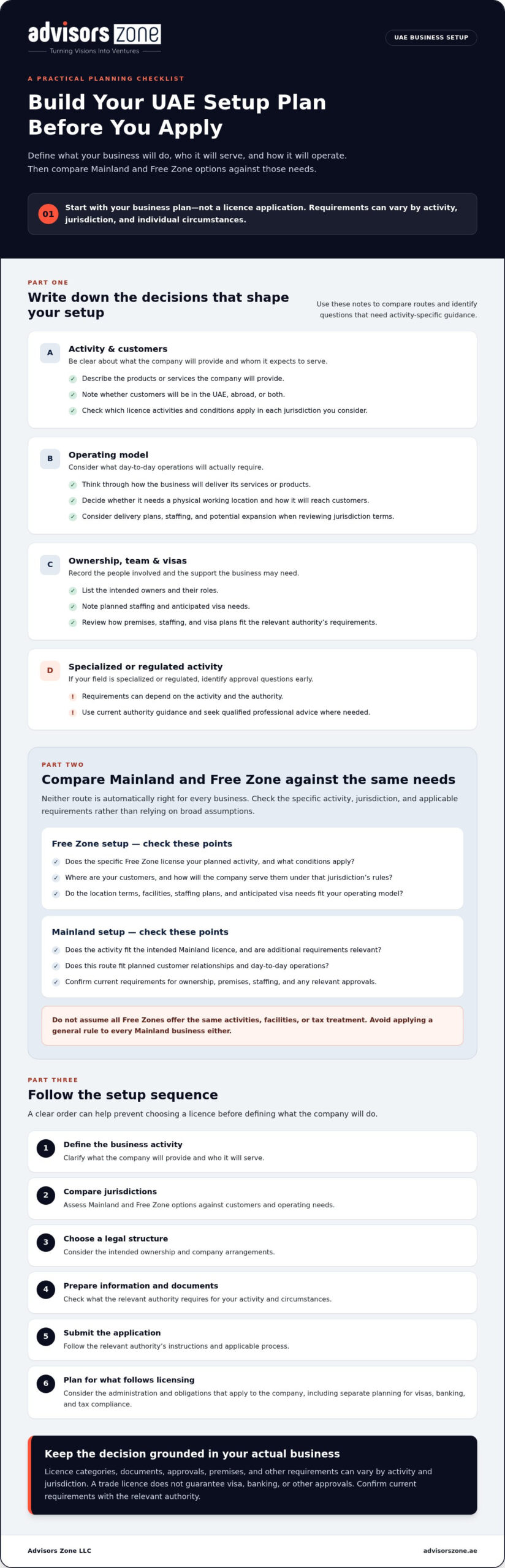
Write down the practical details of your proposed business before comparing setup routes. This will help you explain your plans clearly and identify questions that need activity-specific guidance.
- Activity and customers: Describe what the company will provide, who it will serve, and whether it expects to work with customers in the UAE, abroad, or both.
- Operating model: Consider how the business will deliver its services or products, whether it needs a physical working location, and how it will reach customers.
- Ownership and team: Record the intended owners and their roles, planned staffing, and anticipated visa needs.
- Specialized activities: If the business operates in a regulated or specialized field, identify approval questions early. Requirements can depend on the activity and authority, so use current authority guidance and seek qualified professional advice where needed.
What does starting a UAE company generally involve?
The broad sequence is to define the activity, compare jurisdictions, choose a legal structure, prepare the required information and documents, submit an application, and follow the relevant authority’s instructions. After licensing, plan for the administration and obligations that apply to your company.
This is a roadmap, not a promise of approval or a universal checklist. Activity names, licence categories, documents, and approvals can vary by jurisdiction and individual case. Formal requirements come from the relevant authority and may change.
Advisors Zone helps founders assess their activity, ownership plans, jurisdiction, and operating needs, then understand the company formation steps involved. Starting with these details gives you a clearer basis for comparing options and preparing an application.
Choose Between Free Zone and Mainland Setup Based on Your Business
Neither route is automatically right for every foreign founder. Compare each option with what your company will do and how it plans to operate. Licensing scope and requirements can differ by jurisdiction and activity, so assess specific options rather than relying on broad assumptions about ownership, market access, office rules, or tax treatment.
| Decision factor | Free Zone setup | Mainland setup |
|---|---|---|
| Activity fit | Check whether the relevant Free Zone licenses your planned activity and what conditions apply. | Check whether the activity fits the intended Mainland licence and whether additional requirements apply. |
| Customers and markets | Consider where your customers are and how the company will serve them under the chosen jurisdiction’s rules. | Assess whether this route fits your planned customer relationships and day-to-day operations. |
| Operating plans | Compare the jurisdiction’s terms with your delivery model, staffing plans, and potential expansion. | Consider how the company expects to operate and whether the route accommodates those plans. |
| Office and visas | Review applicable location requirements and how your staffing and visa needs fit the available options. | Confirm the relevant authority’s requirements for premises, staffing, and visa plans. |
When might a Free Zone route fit the business plan?
Free Zone setup is one route to assess, not a default choice for every foreign founder. Compare your proposed activities, target markets, team plans, anticipated visa needs, and the specific jurisdiction’s terms. Don’t assume every Free Zone offers the same activities, facilities, or tax treatment. Read our Free Zone company formation overview for more information about this setup route.
When should a founder assess Mainland formation?
Mainland formation is another option to evaluate against your intended activity, customers, and operating model. Review the relevant authority’s current requirements for the activity, ownership structure, and any premises or approval considerations. Avoid applying a general rule to every business. Our Mainland company formation overview explains this route in more detail.
Visa needs and future growth can also affect the comparison. If you plan to hire staff, bring founders to the UAE, or expand operations, consider those needs alongside licensing and jurisdiction. They do not establish visa eligibility or guarantee approval.
If you’re considering how to start a business in UAE as a foreigner, compare actual activity and operating requirements before choosing a route. Advisors Zone can help you assess the options against your plans and understand the relevant formation steps.
Follow the UAE Business Setup Process From Activity to Trade License
A clear sequence helps prevent a common mistake: choosing a licence before defining what the company will do. The steps below are a practical guide, not a universal checklist. Activity names, licence categories, documents, approvals, and application procedures can vary by authority, jurisdiction, structure, and applicant circumstances.
How should founders define business activities and licensing needs?
Describe the products or services you intend to provide in plain language. For example, specify whether the company will offer consulting, sell products, or deliver a particular service. The activity selected for licensing should match the planned operations and the chosen route. If you intend to carry out several activities, describe each one rather than relying on a broad label.
Before applying, review the activity and any associated approval requirements with the relevant authority. Specialized or regulated work may require additional guidance. Advisors Zone can help clarify activity and licensing considerations as part of UAE company formation. Formal requirements and decisions remain with the relevant authorities.
What documents and application details may need preparation?
Be ready to provide information in broad categories, such as applicant identity details, ownership information, company and structure details, and a description of the intended activity. These are preparation areas, not a guaranteed document list. Exact documents, formats, and additional information depend on the authority, chosen structure, activity, and individual circumstances. Use the current authority checklist for your application.
A typical sequence from planning to licence is:
- Define the activity: Set out what the company will do and the services or products it plans to provide.
- Compare jurisdictions: Assess available routes against your customers and operating plans.
- Settle the structure: Identify the intended ownership and company structure in light of your plans and applicable requirements.
- Prepare documents: Gather the information and materials specified for your case.
- Submit the application: Follow the relevant authority’s process and provide the requested details.
- Follow authority guidance: Respond to requests or instructions and proceed according to the authority’s decision.
Review procedures and timing depend on the authority and application. Missing or inconsistent information may lead to follow-up, so keep company details aligned across your materials and follow the latest instructions. No general guide can promise approval or a fixed processing period.
Understanding how to start a business in UAE as a foreigner means treating licensing as one part of a wider setup plan. Once your activity, route, and structure are clear, you can prepare more effectively and plan for the administration that follows licensing.
Plan for Visas, Banking, and Compliance Without Assuming Approval
A trade licence is an important milestone, but it does not automatically secure a visa, corporate bank account, or particular tax outcome. Treat these as separate parts of your setup plan. Requirements and outcomes can depend on your company, activity, personal circumstances, and current rules.
How should founders approach visa and immigration planning?
List who may need immigration support and in what capacity, such as an investor or partner, employees, or eligible dependants. Factor anticipated visa needs into your staffing and operating plans. Visa options, eligibility, documents, and procedures can vary and are subject to eligibility and current government rules. Advisors Zone assists with relevant visa and immigration steps, but assistance does not guarantee approval. For more detail, consult the UAE residence visa guide.
What should founders know about banking and tax support?
Opening a corporate bank account requires a separate application. Banks assess applications independently and may consider the company’s activities, ownership, documents, and other information. Help with understanding banking options and preparing documents can support an organized application, but bank approval is never guaranteed.
Plan for tax compliance alongside your operations. Do not assume that your chosen jurisdiction determines your tax result. Corporate Tax and VAT obligations depend on applicable rules and your company’s circumstances. Rules and thresholds may change, so check current guidance from official UAE sources and seek qualified tax advice where the impact is material. Advisors Zone provides tax-related business support, but this does not replace qualified tax advice or guarantee a registration or compliance outcome.
Keep cost items clear in your planning. Government or authority charges are separate from consultancy service charges. Confirm the applicable charges for each part of your setup rather than treating them as one fee.
As you work out how to start a business in UAE as a foreigner, record anticipated visa applicants, hiring plans, banking needs, and compliance questions alongside your formation details. This gives you a clearer basis for planning the steps that follow licensing.
For help with formation, visa planning, and banking preparation, learn about Advisors Zone’s UAE business setup support.
Take the Next Step With a Setup Plan Tailored to Your UAE Business
A useful setup discussion starts with a clear picture of the business you want to build. Before choosing a route or preparing an application, bring together your activity, ownership plans, customers, and operating priorities. This turns the question of how to start a business in UAE as a foreigner into practical decisions, while leaving room to confirm details that depend on your circumstances.
What information should you bring to a setup discussion?
Prepare a short summary of your proposed products or services and the customers you intend to serve. Add your planned ownership structure, each founder’s role, and how the company expects to operate. Your starting brief might cover:
- Activity and customers: What the business will do and whom it plans to serve.
- Ownership and roles: Who will own the company and what each founder expects to contribute.
- Staffing and visas: Your anticipated team, potential visa needs, and whether dependants may be part of your planning.
- Operations: Premises preferences, customer markets, delivery model, and any planned expansion.
- Open questions: Details that need current authority guidance or qualified legal, tax, immigration, or financial advice.
Separate confirmed decisions from assumptions. You may know which service you plan to provide but still need to establish which licensing route fits or what requirements apply. Flagging those questions early makes the next steps more focused.
How can Advisors Zone support the next steps?
Advisors Zone provides personalized assistance with Free Zone and Mainland formation options, assessed against your business activity and operating plans. Support can include company formation, licensing and documentation, visa processes, PRO services, banking preparation, and tax-related business support. The aim is to make setup easier to understand and manage, not to treat one route as right for every founder.
Use a simple action list to move forward: define your activity, record your ownership and staffing plans, identify customer and operational needs, compare routes, and confirm current requirements for your case. Keep your notes together so licensing, visa, and later administration decisions can be considered in context.
Ready to discuss your plans? Advisors Zone can review your activity, ownership requirements, visa needs, and preferred jurisdiction, then guide you through the company formation process. Requirements and decisions depend on the relevant rules and authorities, and approvals are not guaranteed.
Turn Your UAE Business Idea Into a Clear Setup Plan
Start by defining what your company will do and how it will operate. Then compare Free Zone and Mainland options against your customers, ownership plans, staffing, and practical needs. To understand how to start a business in UAE as a foreigner, work through these decisions before preparing an application, then confirm current requirements for your activity and circumstances.
Include visas, corporate banking, and tax compliance in your planning. A trade licence does not guarantee visa or bank approval, and tax obligations depend on applicable rules and your business situation. Check current requirements with the relevant authorities and seek qualified advice where needed.
Advisors Zone provides personalized support with Free Zone and Mainland formation, licensing, visa processes, PRO requirements, banking preparation, and tax-related business support. This guidance can help organize the decisions and next steps around your plans.
Need help choosing the right UAE business setup? Discuss your UAE business setup with Advisors Zone. Advisors Zone can review your intended activity, ownership requirements, visa needs, and preferred jurisdiction and guide you through the company formation process.
Frequently Asked Questions
Can a foreigner start a business in the UAE?
Yes, foreign founders can establish businesses in the UAE, but requirements depend on the business activity, jurisdiction, legal structure, and current rules. Some activities may involve additional approvals or specific conditions. Define what the company will do, assess the available setup routes, and confirm the requirements with the relevant authority. This helps you plan around your business rather than assume one set of rules applies to every company.
How do I start a business in the UAE as a foreigner?
To understand how to start a business in UAE as a foreigner, define your proposed activity and customers first. Then compare Free Zone and Mainland options, select a suitable structure, prepare the information and documents requested for your case, and apply through the relevant authority. After licensing, plan separately for visas, banking, and applicable tax obligations. Activity classifications, application steps, and supporting documents can vary, so use current authority guidance for your chosen route.
Is a Free Zone or Mainland company better for a foreign founder?
Neither option is automatically better. The right fit depends on your licensed activity and operating plans. Compare where your customers are, how you’ll deliver your products or services, your staffing and visa needs, and any premises requirements. Conditions also differ between jurisdictions, including licensing scope and other requirements. Assess the specific option against your plans and confirm current rules with the relevant authority before deciding. Do not assume all Free Zones or Mainland activities have identical terms.
What documents may a foreign founder need to set up a UAE company?
Depending on the application, founders may need to prepare identity information, ownership details, company structure information, and a description of the intended activity. This is a general preparation guide, not a complete or universal document checklist. Required documents, formats, and additional information can vary by authority, activity, legal structure, and applicant circumstances. Follow the current checklist for your chosen jurisdiction and application, and keep details consistent across submitted materials.
Does setting up a UAE company automatically give the owner a residence visa?
No. A company licence by itself does not guarantee that an owner will receive a residence visa. Visa applications have separate procedures, and eligibility and requirements depend on the applicant, company, and current government rules. If you expect to need an investor or partner visa, include it in your setup planning and confirm the relevant steps. Advisors Zone can assist with visa and immigration processes, subject to eligibility and current government rules.
Will a UAE company automatically receive a corporate bank account or a particular tax treatment?
No. Banks assess corporate account applications independently, so company formation or licensing does not guarantee account approval. Tax treatment depends on applicable rules and the company’s circumstances; a Free Zone registration does not automatically determine a particular outcome. Check current Corporate Tax and VAT rules, thresholds, and obligations through official UAE sources, and seek qualified tax advice where needed. Advisors Zone supports banking preparation and tax-related business processes but cannot guarantee approvals or outcomes.
How long does it take to start a business in the UAE?
There is no single reliable timeframe for every UAE company setup. The duration can depend on the authority and jurisdiction, business activity, application requirements, document readiness, and whether additional approvals or information are needed. The relevant authority’s review process also affects timing. Prepare accurate information, follow current instructions, and respond to requests as directed. Treat any general estimate as case-dependent, and do not rely on a guaranteed approval date or processing period.