
The simplest-looking setup route may not be the right one for your business. For foreign investors, choosing between a UAE Free Zone and Mainland company is only part of the decision. Your business activity, intended customers, licensing requirements, visa needs, and plans for banking and compliance also matter. UAE business setup for foreign investors should start with your business goals, not a package or jurisdiction alone.
If you’re unsure which structure fits, begin by identifying what the business will do and where it needs to operate. Requirements vary by activity and jurisdiction, and setup costs may include separate authority or government charges and consultancy service charges. Understanding these differences early can help you avoid choosing a route that doesn’t support your plans.
This 2026 guide compares the main setup routes and the questions to consider before choosing one. It also outlines the formation journey, from defining an activity and selecting a license to planning for visas, banking, and post-setup responsibilities. Use these points to prepare for tailored guidance from Advisors Zone.
Key Takeaways
- Build your UAE business setup for foreign investors around the activity you’ll carry out and the customers you plan to serve.
- Compare Free Zone and Mainland routes by operating scope, office needs, ownership plans, and future business requirements.
- Clarify how your chosen activity affects licensing, then plan visa needs around your staffing and residency goals.
- Prepare for a formation process that may involve different documents and steps depending on the jurisdiction and authority.
- Separate government or authority charges from consultancy fees, and plan for banking and ongoing compliance alongside formation.
UAE Business Setup for Foreign Investors: Start With Your Business Plan
Before choosing a Free Zone or Mainland route, define what the company will do and how it will operate. A suitable setup connects your proposed activity with the jurisdiction, license, ownership structure, and practical arrangements for staff and workspace. Starting with a package or location before answering those questions can leave important needs unresolved.
The UAE economy includes a range of established and developing sectors. Reviewing the Economy of the United Arab Emirates can provide general background, but your setup decision should be based on your business model and intended market.
What should a foreign investor decide before formation?
Write a short operating plan before beginning company formation. Describe the products or services you intend to provide, how you expect to deliver them, and who your customers will be. Be specific: an advisory business serving clients remotely may have different practical needs from a company importing and distributing goods.
Next, map out ownership and responsibilities. Identify the proposed shareholders, who will manage the company, and what matters most to each investor, such as control, decision-making, or the ability to bring in future partners. Separate what you need to launch from what you may add later. Your initial staffing plan, for example, may differ from your hiring needs as the business grows.
- Activities: What will the company actually do?
- Customers: Will you serve UAE customers, international clients, or both?
- Shareholders: Who will own the company, and how will management work?
- Staffing: Who needs to work in the UAE, and what residency needs should you plan for?
- Future plans: Could you add activities, employees, partners, or new markets?
Which setup questions affect the route you choose?
Your planned activities shape the licensing discussion. Describe them accurately rather than relying on a broad business label. Consider where you’ll conduct business, how customers will reach you, and whether your operations depend on a particular office arrangement. These details help you compare the available setup routes.
Also consider the support you may need after formation. Visa and immigration planning should reflect your staffing and residency goals. Banking and tax-related support may also be relevant to your post-setup plans. Eligibility and requirements depend on the circumstances and current rules.
Authority requirements aren’t identical across UAE jurisdictions. They may vary with the activity, ownership structure, visa needs, and office arrangements. Advisors Zone assists with Free Zone and Mainland formation and trade licensing, while the relevant authority determines applicable requirements and approvals.
Free Zone or Mainland? Compare UAE Setup Routes by Operating Needs
For UAE business setup for foreign investors, compare the routes against the way the company will actually operate. A Free Zone may suit some activity and market plans, while a Mainland structure may better match others. Neither is automatically the right choice: licensing, facilities, ownership considerations, and operating scope depend on the selected authority and the specific business.
| Planning factor | Free Zone | Mainland |
|---|---|---|
| Activity fit | Check whether the proposed activity is permitted by the specific Free Zone authority and fits its licensing options. | Confirm the activity and applicable licensing route for the relevant authority. |
| Operating scope | Assess where the company will serve customers and how it will conduct business, including any plans to serve the UAE market directly. | Consider whether the company’s intended operations call for a Mainland structure and what requirements apply to that activity. |
| Ownership plans | Review the authority’s available company structures and ownership requirements. | Check the ownership rules for the activity and structure. Requirements can vary for certain activities. |
| Office needs | Compare the facilities or workspace arrangements available under the selected authority’s current requirements. | Establish what premises or office arrangements the specific licensing route requires. |
| Future operations | Consider whether planned hiring, added activities, or changing markets fit the selected zone’s terms. | Consider how expansion plans may affect licensing, premises, or other requirements. |
When might a Free Zone structure fit an investor’s plans?
Start with the proposed activities, target customers, and operating model, then compare them with a specific zone’s current rules. Free Zones aren’t interchangeable: permitted activities, processes, facilities, and other terms can differ. Don’t assume one zone’s conditions apply to another, or that a Free Zone company receives a particular tax treatment simply because it is in a Free Zone. For formation details, explore Free Zone company setup.
When should an investor assess a Mainland structure?
Assess Mainland formation if your planned activity or operating scope points toward this route. Licensing and registration details depend on the selected activity and current requirements, so consider them as part of the same decision rather than choosing a structure first and resolving the license later. Advisors Zone can help you compare your business plans with the relevant formation route and licensing considerations.
Use the table as a starting point, not a substitute for a case-specific assessment. To discuss the factors that apply to your plans, contact Advisors Zone.
Match Activities, Licensing, Visas, and Support to Your UAE Business Plan
A company license needs to reflect what the business is set up to do. For UAE business setup for foreign investors, align the activity description, chosen jurisdiction, and operating plan before applying. A broad or inaccurate description can raise questions during the licensing process. Outline the actual products or services, how you’ll deliver them, and who you expect to serve.
How do business activities shape licensing decisions?
Use your business plan to identify the activities you intend to carry out, then discuss how they fit the relevant license and authority. For example, a company offering professional services has a different operating model from one buying and selling goods. That distinction helps frame licensing questions, but it doesn’t determine the answer by itself. Requirements may differ by activity and jurisdiction.
Before applying, clarify whether the proposed activity wording covers your planned work, whether you need to consider more than one activity, and what supporting information the authority may require. Requirements can change and vary by case, so don’t use another company’s license as a template. For broader context, review a UAE business license guide alongside the relevant authority’s current requirements.
How should investors plan for visas, banking, and tax support?
Company formation is one part of the process. Visa and immigration steps, corporate banking, and tax-related responsibilities are separate considerations to plan around your staffing, residency, and operational needs. Estimate who may need to live or work in the UAE and when, rather than treating visas as an automatic result of company formation. Visa assistance is subject to eligibility and current government rules.
For banking, prepare to explain the company’s activities, ownership, expected transactions, and business purpose. Advisors Zone provides corporate bank account assistance, including help preparing documentation and identifying suitable options. Banks make their own decisions, so account approval is never guaranteed.
Tax and VAT obligations depend on current rules and the company’s circumstances. Don’t assume a particular setup route automatically means a specific tax outcome. Verify applicable requirements through current official UAE sources and seek qualified tax advice where needed. Advisors Zone provides tax-related business support to help with post-setup planning.
Before proceeding, bring together your activity descriptions, ownership plan, staffing expectations, and anticipated banking and compliance needs. This gives Advisors Zone a clearer basis to guide your UAE business setup for foreign investors without treating visas, banking, or tax matters as automatic extensions of the license.
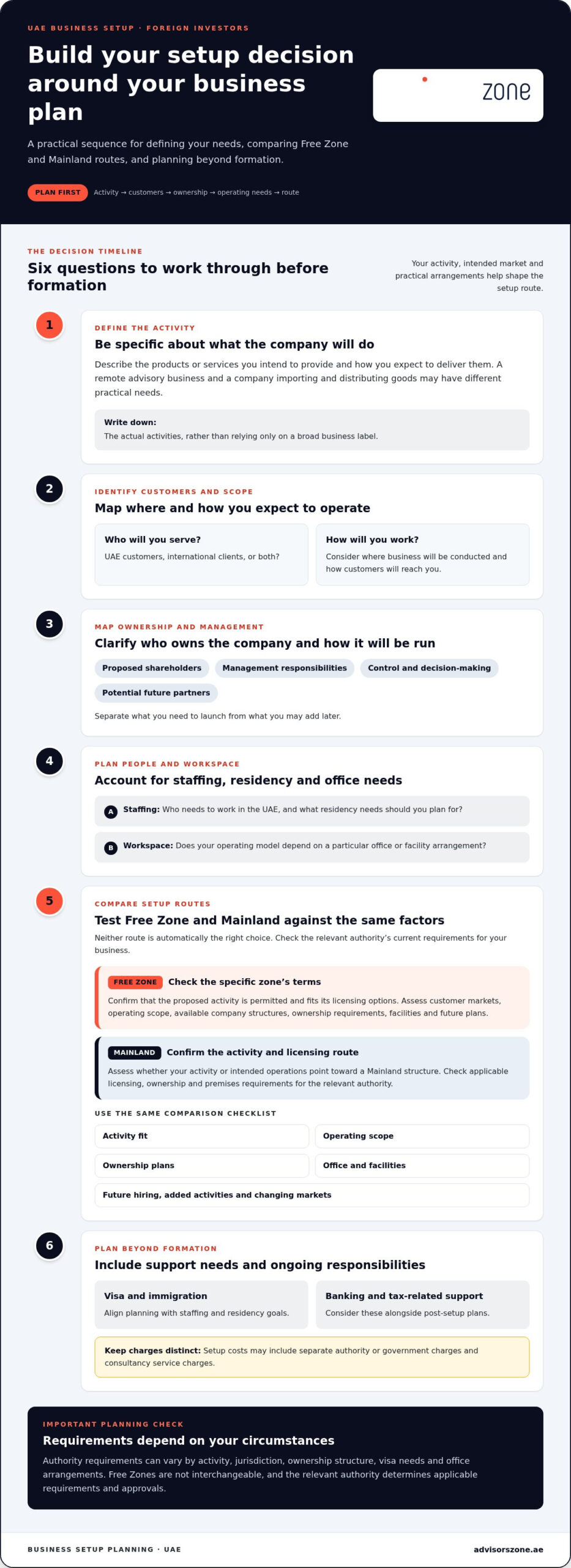
How to Prepare for UAE Company Formation: A Practical Sequence
A clear preparation process helps you move from an idea to a formation plan without assuming every UAE company follows identical steps. For UAE business setup for foreign investors, the right sequence depends on your intended activities, selected jurisdiction, ownership structure, visa plans, and the requirements of the relevant authority.
What information should an investor organize first?
Start with a concise description of what the business will do and how it will operate. Note who its customers will be, how it will deliver its products or services, and whether it expects to work from a particular type of premises. Add the proposed shareholders, ownership priorities, management responsibilities, staffing plans, and any visa-related needs.
Use this as a planning brief, not a universal document checklist. The relevant authority determines what documents and information it requires for the specific activity and structure. Requirements may also depend on shareholder circumstances and the chosen jurisdiction.
What happens from route selection to post-formation planning?
Use this practical sequence to organize your decisions. Exact procedures may vary by authority and case.
- 1. Define the business plan. Record the intended activities, operating model, customer reach, ownership priorities, and expected staffing needs.
- 2. Assess the formation route. Compare Free Zone and Mainland options against your activity and operating plans. Don’t select a route based on a general assumption about access, ownership, facilities, or tax treatment.
- 3. Prepare for licensing. Align the proposed activity description with the licensing route under consideration. Identify questions about premises, shareholders, or supporting information that need resolution.
- 4. Confirm documentation and charges. Follow the relevant authority’s current documentation requirements. Review government or authority charges separately from Advisors Zone consultancy service charges, and understand what each covers.
- 5. Submit and respond. Once the application information is prepared, it can be submitted through the applicable process. Follow-up or additional requests depend on the authority’s review and the details of the application.
- 6. Plan for after formation. Consider visa and immigration steps, corporate banking preparation, and applicable tax or VAT responsibilities as separate workstreams. Requirements vary and should be assessed for your circumstances.
Processing times and outcomes depend on the application, its supporting information, and decisions by the relevant authority. No sequence can guarantee approval or a fixed completion date. For cost planning, separate authority charges from service fees and review the applicable components instead of relying on a generic total.
Advisors Zone can help organize your route assessment, licensing preparation, and formation journey around your business plan. Discuss your company formation plans with Advisors Zone.
Move From UAE Setup Planning to a Supported Formation Journey
A practical setup decision follows a clear path: define the business activity, establish where and how the company will operate, compare formation routes, and align licensing with your ownership and staffing plans. Then consider the support you’ll need after formation. This keeps the decision grounded in your business priorities rather than assumptions about what a particular structure includes.
What can tailored setup assistance help coordinate?
Advisors Zone supports investors considering Free Zone and Mainland company formation. We can connect your proposed activities and ownership priorities with formation and trade licensing discussions, then coordinate related needs such as PRO services, visa and immigration assistance, corporate bank account preparation, and Corporate Tax or VAT-related business support.
These areas are connected, but they aren’t the same approval or process. Visa eligibility and requirements depend on current government rules and individual circumstances. Banks make their own account decisions, and tax obligations need to be assessed against current rules and the company’s situation. Advisors Zone helps make the steps easier to understand and manage, but doesn’t replace qualified legal, tax, immigration, or financial advice where needed. Requirements and outcomes remain subject to relevant rules and authority decisions.
What should an investor share when requesting guidance?
Prepare a concise summary of your intended activities, target customers, operating model, proposed shareholders, ownership priorities, staffing expectations, and visa needs. Include plans to expand activities, hire, or serve new markets. The clearer the picture, the more useful the initial discussion can be.
It also helps to list the questions you want answered, such as which formation route best fits your operations, what licensing considerations apply, and what post-formation support you may need. Ask for costs to be presented clearly, with government or authority charges distinguished from consultancy service charges. Applicable items can vary by jurisdiction, activity, structure, and other case details.
UAE business setup for foreign investors isn’t a single route that suits every company. Advisors Zone provides personalized guidance across formation and related support so you can make decisions with your plans in view. Bring your priorities and questions to the discussion to develop a clearer understanding of the options and considerations involved.
Take the Next Step With a Clear UAE Setup Plan
The right structure starts with your business, not a one-size-fits-all package. Define your activities, customer reach, ownership priorities, and operating needs before weighing Free Zone and Mainland options. Then align your chosen route with licensing, staffing, and plans for visas, banking, and compliance.
For UAE business setup for foreign investors, preparation can make each decision easier to assess, but authority requirements and individual eligibility still vary. Advisors Zone provides personalized guidance across Free Zone and Mainland formation, with support for licensing, visas, PRO services, corporate banking, and tax-related business needs.
Share your proposed activities, ownership plans, operating model, and visa requirements to start a focused discussion. You can also clarify which charges are payable to the relevant authority and which are consultancy service fees. For tailored guidance on your formation plans, discuss your UAE business setup with Advisors Zone.
With a clear plan and the right questions, you can move forward with a setup aligned with your goals.
Frequently Asked Questions
Can a foreign investor set up a business in the UAE?
Foreign investors can establish businesses in the UAE, subject to the proposed activity, legal structure, and applicable authority requirements. Ownership conditions can vary by activity and structure, so confirm the current rules for your intended business before choosing a route or proceeding with an application.
Is a Free Zone or Mainland company better for a foreign investor?
Neither route is automatically better. The right choice depends on your activities and operating plans. Compare activity permissions, customer reach, facilities, ownership structure, and future plans. Each Free Zone has its own terms, and Mainland requirements also depend on the activity and applicable authority.
What documents are needed for UAE company formation?
There isn’t one document checklist that applies to every UAE company. The relevant authority determines the information and documents it needs based on factors such as the proposed activity, jurisdiction, legal structure, and shareholders. Start by organizing your activity description, ownership plans, management details, and operating requirements. Then follow the authority’s current instructions for your specific application.
How much does UAE business setup cost for foreign investors?
The total cost varies by jurisdiction, business activity, company structure, facilities, and visa requirements. An estimate may include separate government or authority charges and consultancy service charges. Review these as distinct items rather than assuming one quoted total covers everything. Advisors Zone can help clarify the setup considerations and cost components for your proposed route.
How long does it take to set up a UAE company?
There’s no single processing time for every UAE company formation. The timeline can depend on the selected authority, business activity, application details, required documents, and any follow-up or approvals. An adviser can help prepare and coordinate the process, but can’t guarantee a fixed completion date or authority decision. Confirm the expected steps for your specific application before making dependent business commitments.
Does setting up a UAE company automatically provide a residence visa?
No, company formation doesn’t automatically grant a residence visa. Visa applications involve separate steps, and eligibility, requirements, and approvals depend on the applicant’s circumstances and current government rules. Plan visa needs around the company’s staffing and residency requirements. Advisors Zone can assist with visa and immigration processes, subject to eligibility and current government rules.
Can an adviser guarantee a UAE corporate bank account?
No. An adviser can help prepare company information, organize supporting documentation, and identify banking options, but the bank makes the account decision. Approval isn’t guaranteed and may depend on the bank’s review of the company, its ownership, activities, and other details. Treat banking as a separate post-formation workstream, and prepare to explain the business purpose and expected operations clearly when making an application.